

The complete guide
Choosing a 1000 Piece Scenic Jigsaw Puzzle
A small puzzle can be over before you have settled into it. A larger one brings a different problem, finding a subject you want to spend time with and enough room to leave it out. This 1000-piece Hintersee Lake puzzle offers a landscape project with a clear finished size and two reference aids.
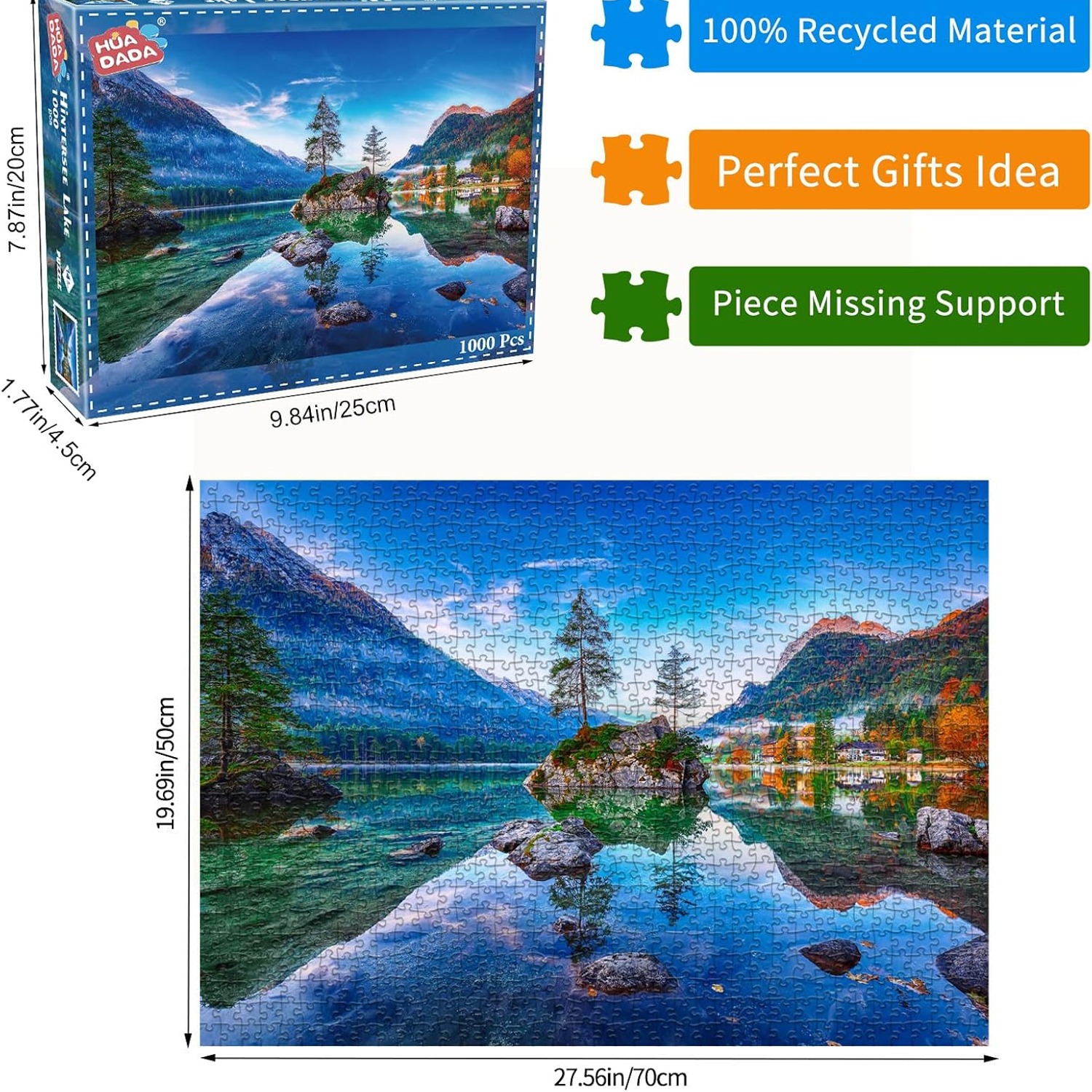
The picture shows an autumn sunrise at a lake in the German Alps. It comes with a full-size poster and A-D hints on the backs of the pieces. Those details matter when deciding whether this is the right project for your table, your experience and the way you like to puzzle.
Start with a picture you want to build
Piece count is useful, but the image is often what keeps a puzzle interesting. Here, the subject is Hintersee Lake in Ramsau, Upper Bavaria. Trees stand on a rocky island in an autumn sunrise scene.
If you enjoy a lake jigsaw puzzle, the setting may be the main reason to choose it. You will spend time looking closely at small parts of the same picture, so choose a subject you like rather than buying by piece count alone. An appealing view can make returning to an unfinished section more inviting.
Before ordering an autumn landscape puzzle, look through the product images. Consider whether you enjoy working with natural shapes and areas of related colour. Scenic pictures call for a different approach from images filled with text, separate objects or bold graphic borders.
What the 1000-piece count means for your choice
This is listed as an advanced jigsaw puzzle for ages 14 and up. That gives you a useful starting point, but it does not tell you exactly how difficult you will find it. Familiarity with jigsaws, lighting and the time you give each session all affect the experience.
There is no stated completion time. It is better to choose this as a project you can return to than to expect a guaranteed finish in one evening. Some people like long sessions; others prefer to fit a few pieces before moving on.
If this will be your first 1000 piece landscape puzzle, think about how you felt with your last puzzle. Were you ready for more pieces, or did you wish it were shorter? The poster and back hints offer help, but the product still has 1000 pieces to assemble.
Measure your table before you order
The finished picture measures 70 × 50 cm. That is the area needed for the assembled rectangle, not the whole working space. Loose pieces will need somewhere to sit while you search, sort and compare.
Measure the surface you plan to use. Then think about where the reference poster will go and whether other people need access to the table. A surface that only just holds the finished image may feel cramped during the early stages.
A dining table can work, but consider when it must be cleared. If you cannot leave a puzzle in place, plan how you will manage unfinished sessions before opening the box. A puzzle board or mat may be worth considering separately, but neither is listed in the contents.
Good access matters too. You should be able to reach the centre without leaning heavily on fitted sections or brushing loose pieces onto the floor.
How the reference poster helps
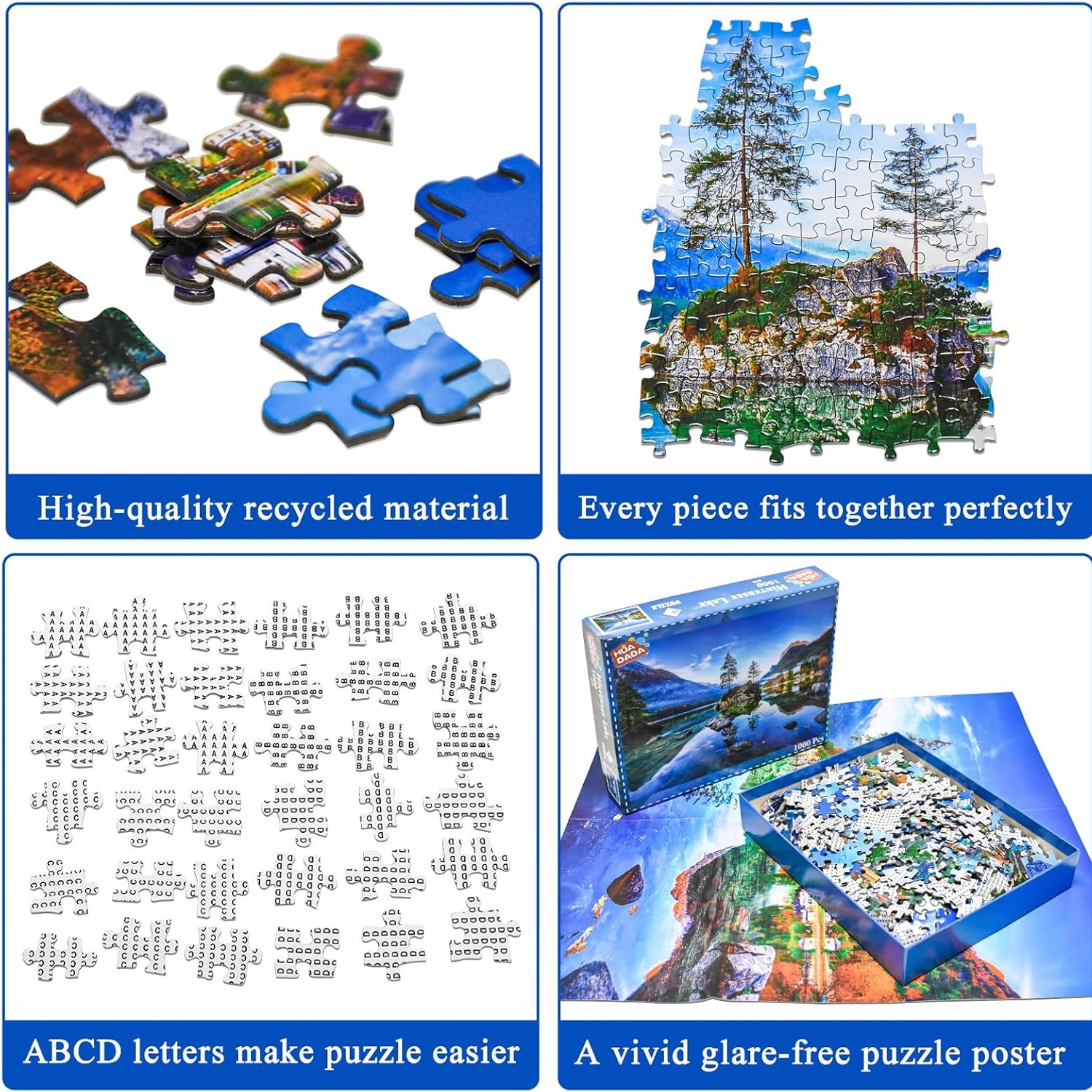
The box contains one 1:1 poster. This gives you a full-size image to consult as you work, rather than relying only on the picture on the packaging.
A jigsaw puzzle with poster can be useful when you want to study a small detail. Compare the image with a loose piece, then look for the area where its colour or printed shape might belong. You do not have to keep the poster in constant use.
Think about where it will sit before you spread out the pieces. As the reference is full-size, it also needs room. Keep it close enough to view without covering your sorting space.
For a shared session, place the poster where everyone can consult it. That avoids one person holding the only useful reference while someone else waits to check a detail.
Choose whether to use the back hints
A-D letters on the backs divide the pieces into sections. These give you another way to organise the project if working from the image alone feels too slow.
One approach is to sort by the letters first, then work through a smaller group at a time. Another is to ignore the hints at the start and use them only when you get stuck. Neither approach changes the purpose of the activity, which is to assemble a picture in a way you enjoy.
A letter coded jigsaw puzzle may suit a household where people prefer different levels of help. You could agree to use the poster freely while leaving the back hints for later.
If you prefer an image-only challenge, simply keep the pieces face up. The hints are there as an option, not a rule you must follow.
Set up a sensible first session
Begin with a clean, dry surface and open the pack where loose pieces are easy to spot. Keep the packaging nearby so everything has a place to return to.
Many puzzlers start by separating straight-edged pieces. Building the border can establish the outline of a rectangular jigsaw puzzle and show how much room the picture will take. You can also group pieces by visible colours or recognisable details.
Do not worry about finding a place for every piece immediately. Small clusters can develop away from the main picture, then move into position when their location becomes clear.
Check each join gently. If two pieces need force, set them aside and try another match. A convincing fit should also make sense in the printed image, so look at both shape and picture detail.
Solo time or a shared project
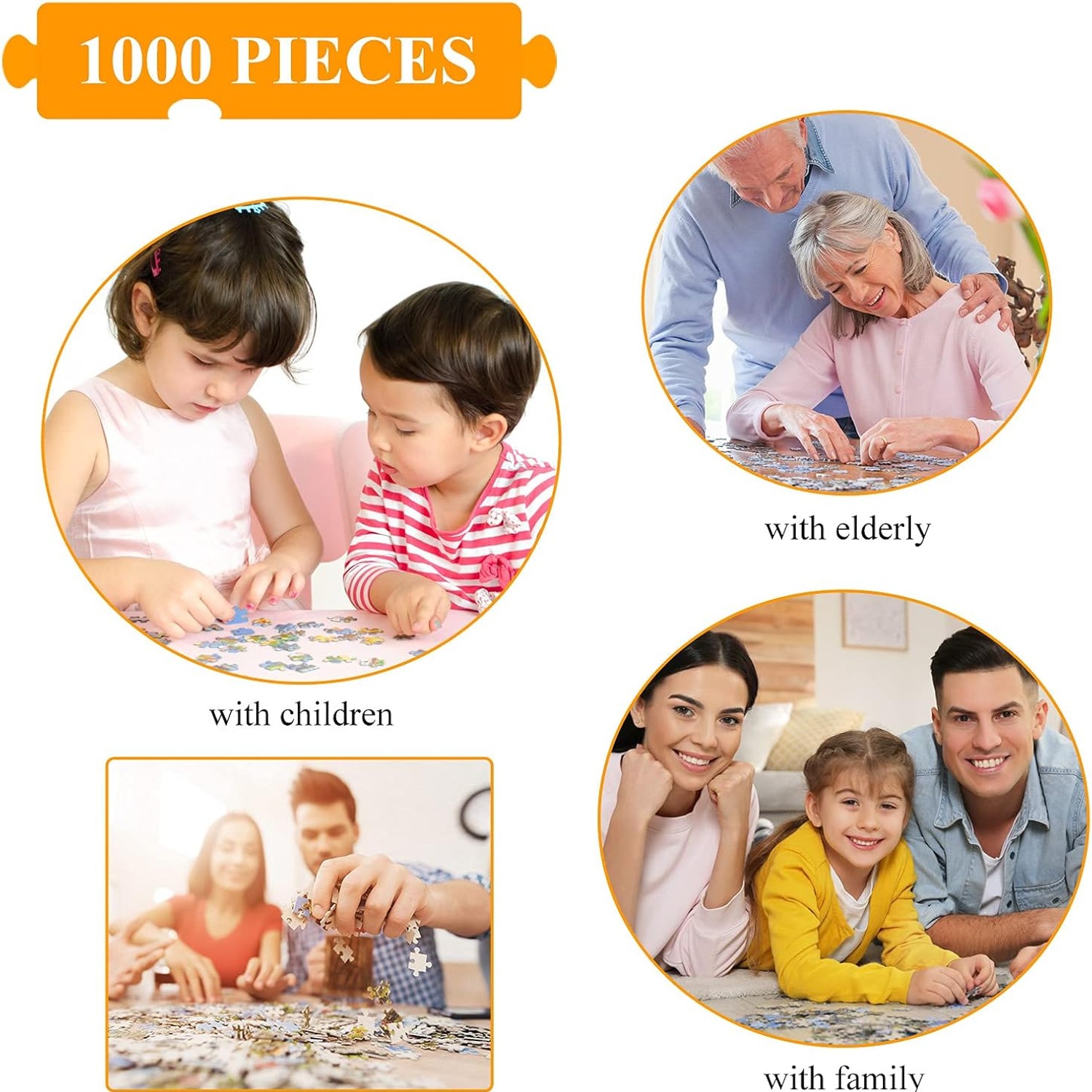
No fixed number of players is stated. This adult tabletop puzzle can be approached alone or with others, as long as the space allows it.
Working alone lets you choose the pace and leave your sorting system unchanged. You might spend one session on the border and another comparing a small group of pieces.
For a family jigsaw activity, divide the work in a way that feels useful. One person might look for edges while another studies a distinct part of the image. There is no need to assign equal areas or turn the session into a race.
Keep the suggested age of 14 and up in mind. This listing does not present it as a puzzle for younger children, even when the wider family is taking part.
Check the contents rather than assuming extras
The stated pack contains one 1000-piece puzzle and one poster. The specifications identify the puzzle material as cardboard and give an item weight of 650 g.
Sorting trays, a storage case, glue and a frame are not listed as included. If any of those are important to how you plan to use the puzzle, make separate arrangements rather than expecting them in the box.
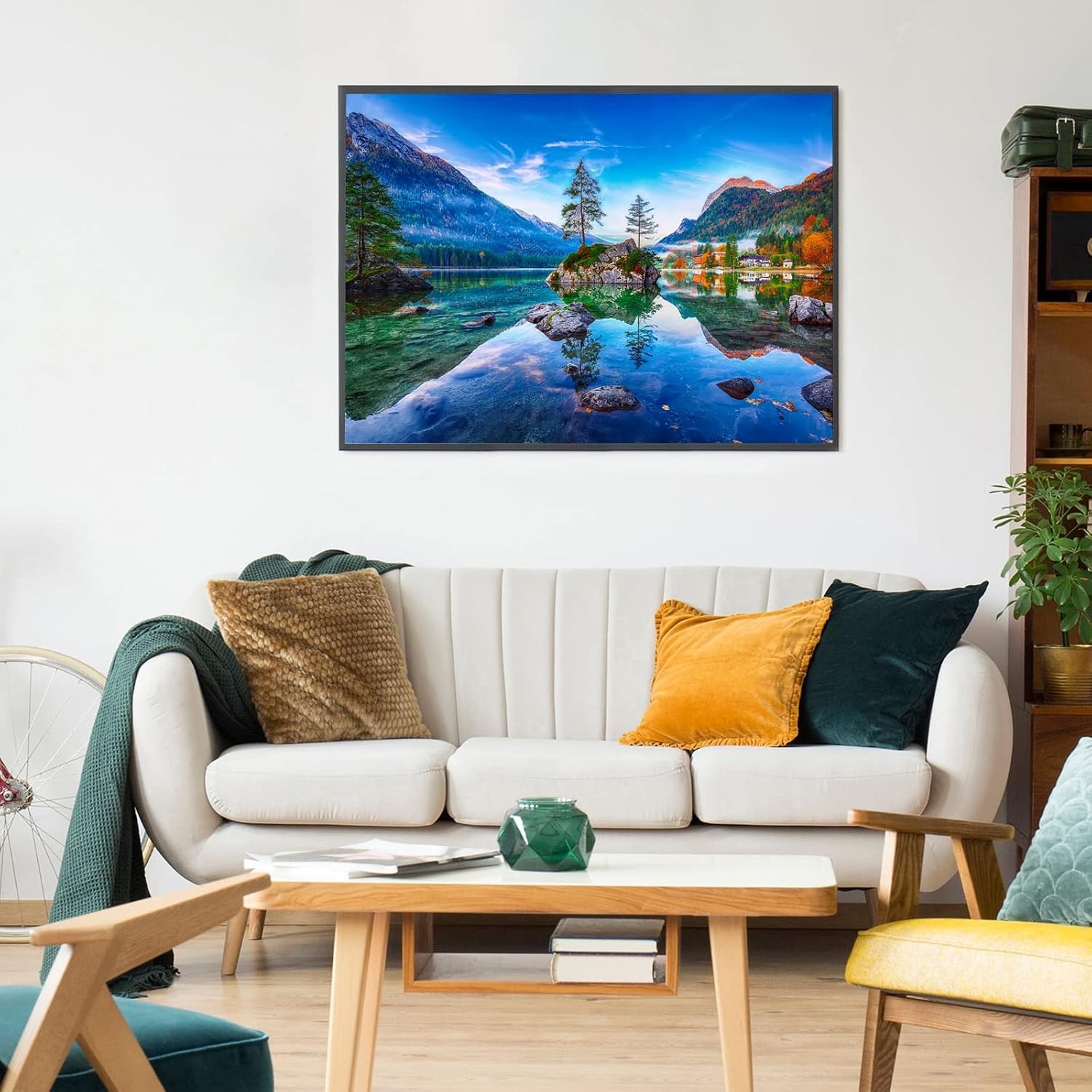
The finished size is also useful if you hope to display the picture. Check any frame or mounting method against the assembled puzzle before committing to it. Think about whether you want a lasting display or would rather take it apart for another build.
Care for the puzzle as you work
Cardboard pieces need a dry workspace. Keep drinks away from the working area and avoid cleaning pieces with water. Clean hands and a clear table are simple ways to reduce marks.
Handle fitted sections with care. Moving a large group of joined pieces can pull at the edges, so support it rather than lifting it by one corner. When taking the picture apart, separate pieces gently.
Store the poster with the puzzle so it is easy to find next time. Keeping all contents in the original packaging also reduces the chance of leaving loose pieces behind after a session.
If a piece seems missing, check the table edges, packaging and nearby floor before packing up. Contact us if you still cannot find it or notice damage.
Buying it as a gift
A scenic puzzle gift works best when the image and challenge fit the person. Ask whether they enjoy landscape scenes and larger piece counts. Also consider their available table space.
This Hintersee Lake puzzle has a stated age range of 14 and up and an advanced skill level. Those are more useful buying checks than assuming every keen puzzler wants the same difficulty.
For a time-sensitive gift, check the delivery estimate before ordering. Returns are available within 14 days from delivery, with the item unused, complete and in its original packaging.
The short version
Choose this puzzle if you want a 1000-piece lake scene with a full-size reference poster and optional A-D back hints. Allow more than the finished 70 × 50 cm area for comfortable sorting.
It is an indoor cardboard jigsaw for ages 14 and up, listed at an advanced level. If the picture appeals to you and the size suits your table, it offers a project you can approach at your own pace.